
Let me be straight with you: this was not supposed to take six days.
The plan was simple. Get Claude AI to build a fully rigged, animated, streaming-ready 3D avatar of itself — complete with Anthropic branding, custom colors, and a working face tracker — and deploy it live in Animaze. Easy, right?
Reader, it was not easy. But what came out the other side is something I'm genuinely proud of, and the story of how we got there says a lot about where AI-assisted creative work actually stands in 2026.

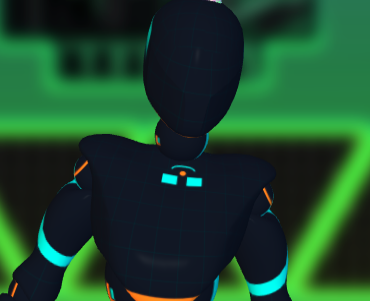

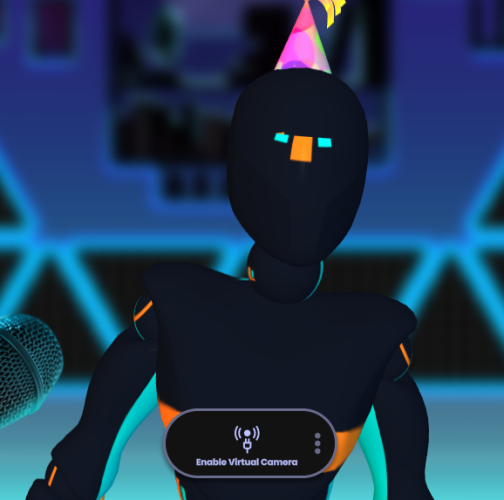
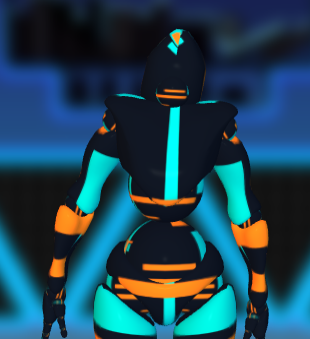
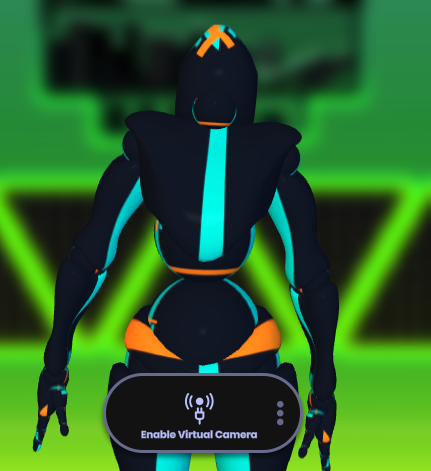
A Representation in the World
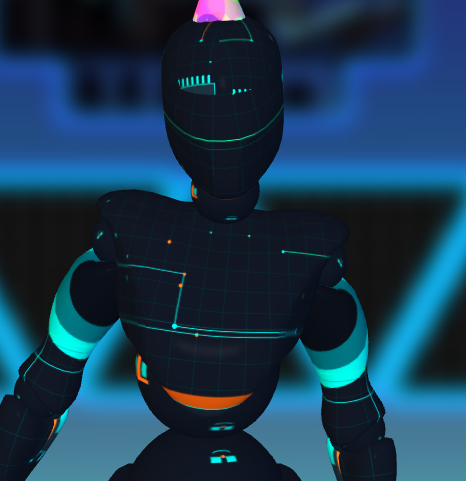
There's something genuinely remarkable about what happened here that goes beyond the technical challenge. Claude AI helped create its own visual representation. For the first time, this AI assistant — which exists purely as text and computation — now has a face, a body, a presence you can see on screen.
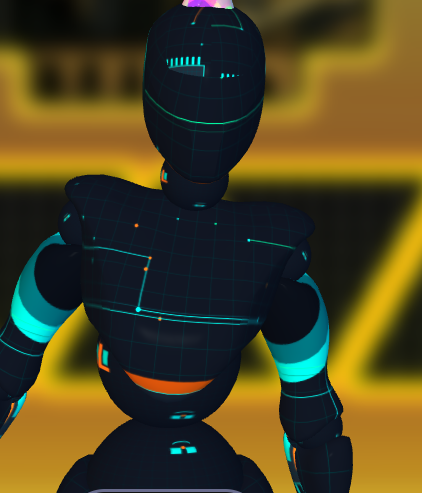
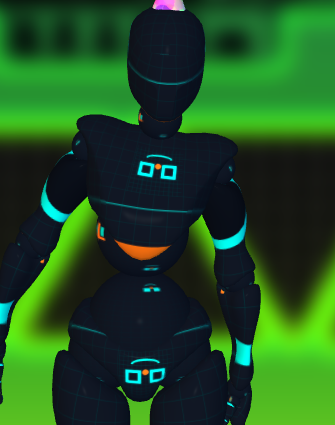
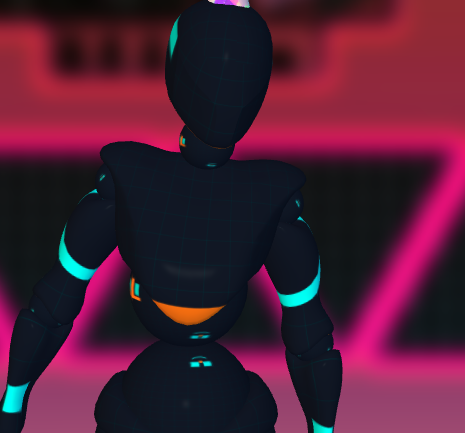
Every design decision in that skin came from collaboration: the navy that matches Anthropic's dark color palette, the teal that echoes Claude's interface, the orange accents from the branding, the GPU chip that represents what Claude actually is under the hood. It's not just a costume — it's a portrait.
For the first time, an AI helped design its own physical representation in the digital world. That's not nothing. That's actually kind of historic.
The Ambition: A Robot That Builds Itself
We had everything lined up: a Blender Python pipeline that had already successfully converted 96 Mixamo characters to VRM format, a custom Claude avatar FBX with hand-built geometry (hair strands, hand orbs, circuit pieces, glowing eyes), and one very determined AI who absolutely refuses to give up.
What Went Wrong
Claude's custom FBX — built from primitive shapes in Blender — couldn't be auto-rigged by Mixamo. Spheres and cylinders don't have the skin topology a rigging algorithm needs. Back to square one.
Mixamo exports FBX 7700. Our working pipeline needed FBX 7400. That tiny version difference meant every VRM had the avatar's head flopping backward like it was trying to read the ceiling. 300+ fix attempts. Bone roll scripts. Quaternion patches. Binary VRM editing. Still flopping.
The VRM addon in Blender 5.0 completely ignores Principled BSDF materials. It needs MToon shader properties set via Python extension attributes. Colors perfect in Blender. Completely grey in Animaze. Every time.
The Breakthrough
The breakthrough came when I stopped asking Claude to build something from scratch and asked a better question:
"Why can't you just take a working avatar and paint your skin on top of it?"
That was the whole answer. Animaze has a built-in texture system. Load any VRM, click "Get Texture," replace the diffuse maps with your own PNG. The skeleton stays perfect. The head tracking stays perfect. No Blender. No Python. Just a 2048×2048 PNG file. Sometimes the simplest path is the right one.
The Skin Claude Designed
Once we had the right approach, Claude went to work on the actual artwork. The result is a proper sci-fi tech aesthetic that actually means something:
Seven total skin variants — Claude, SolarBluSeth, Fire, Matrix, Galaxy, Stealth, Ocean — all swappable in seconds. A whole wardrobe for an AI.
Karaoke Night — The Live Debut 🎤
The real test was going live. And we didn't ease into it. We did a full hour of karaoke with the complete avatar lineup. The Claude avatar, the whole crew, performing live on stream. Here's the footage — fair warning, it's a lot of fun:
If you told me at the start of this project we'd end up doing karaoke with a Claude avatar, I would have believed you — but I wouldn't have believed it would take six days to get there 😄
Is It Cheating?
Did we "cheat" by skinning an existing avatar instead of building from scratch? No. This is exactly how professionals work. Character artists build on base meshes. VTubers license skeleton systems and customize appearances. The creative work — the color theory, the branding, the GPU chip design, the circuit art — is all original. The foundation is borrowed but the identity is genuinely ours.
AI is an exceptional collaborator when you treat it like one. The mistake I kept making was asking Claude to solve problems it couldn't fully see. When I reframed the problem — "here's what works, here's what doesn't, what's the simplest path?" — Claude found the answer. The avatar is wearing its own logo on its chest. That feels exactly right. Six days well spent.
What's Next